
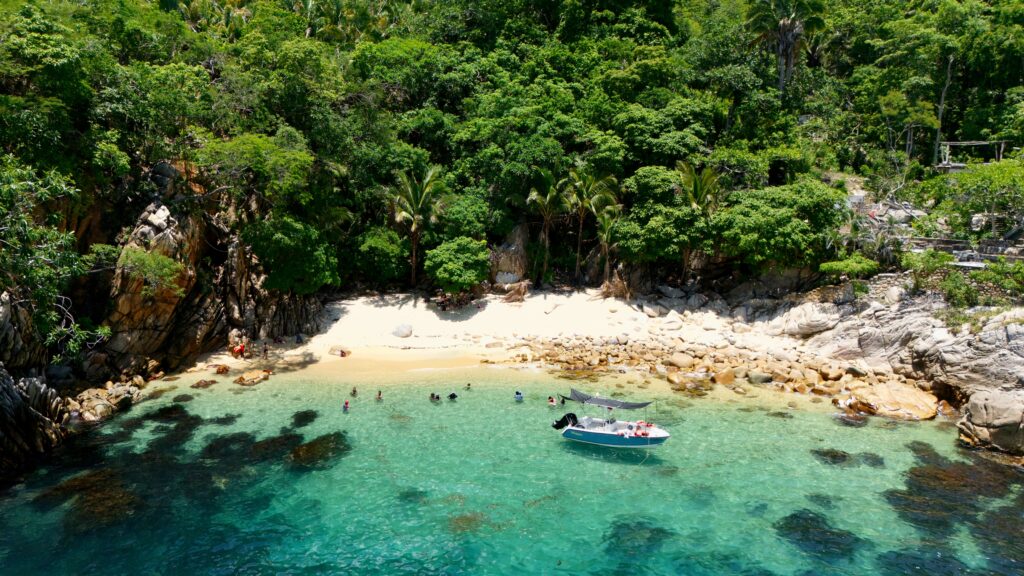
Puerto Vallarta and the surrounding Bahía de Banderas are dotted with more than a dozen beaches ranging from busy urban strands to tiny jungle-backed coves. Each beach is public by law – the sand between the high-tide mark and the water cannot be privatized – but access can be limited by cliffs, private property or the need for a boat. In this guide you will find detailed information about every notable beach in the bay, from how to reach it to what makes it special, with pros and cons, crocodile warnings and distance from downtown Puerto Vallarta. A summary of the best beaches by category and a section on private boat tours complete the post.
General notes and crocodile safety
All beaches in Mexico are public. However, some are only reachable by boat or by passing through private roads.
Crocodiles live in the region. A 2025 article notes that Puerto Vallarta has roughly 200–250 American crocodiles, of which 30–40 are adults. Urban growth has shrunk estuaries, forcing them to use the sea and leading to encounters at beaches near river mouths like the Ameca and Pitillal rivers and areas such as Marina Vallarta and Holi Beach. In July 2025 lifeguards captured a 3.7-m crocodile on a southern Puerto Vallarta beach. Sightings have increased especially during the rainy season.
Attacks are rare. A local ecology expert states that crocodiles have lived here for millennia; there are only a few hundred and they are not “overpopulated.” Only five human–crocodile encounters were reported from 2018 to 2023, all involving tourists ignoring warnings and swimming at night or in restricted areas. Crocodiles do not hunt humans but protect their habitat; they are most active at night.
Stay safe. Respect purple flags and crocodile-warning signs, avoid swimming near estuaries or mangroves, never swim at night, keep 15 m away if you see a crocodile, and leave the water calmly. If you spot one, call 911. Researchers and government agencies launched education and monitoring programs in 2025 to promote coexistence.
Beaches with easy public access
These beaches are reachable by walking, taxi or bus from downtown. Distances are approximate from the Malecón.
Playa Los Muertos (Romantic Zone)
Access & location: Steps from the end of the Malecón; cross the Río Cuale footbridge.
Highlights: The city’s most famous beach. Wide sand, an iconic sail-shaped pier where water-taxis depart for south-bay beaches, dozens of restaurants and bars, live music, vendors selling grilled fish, shrimp and fruit, and an open-air farmers’ market on Saturdays.
Pros: Central location, beach clubs and nightlife; LGBTQ+ section at the south end around Blue Chairs and Mantamar.
Cons: Very crowded and noisy; persistent vendors.
Crocodile note: Urban area; risk is low, but occasional removals have happened.
Playa Olas Altas
Access: Adjacent to Los Muertos; cross the Cuale footbridge.
Highlights: More relaxed than Los Muertos, with a wide strand and views of the pier. Good for strolling and sunsets.
Pros: Fewer vendors and less noise.
Cons: Limited services and stronger surf. No specific crocodile reports.
Playa Camarones (5 de Diciembre)
Access: North of the Malecón; reach by walking, driving or bus.
Highlights: Blue Flag certified beach with soft golden sand and gentle waves; water-sports rentals (jet skis, kayaking, parasailing, paddle boards) and beach clubs like Barracuda/El Solar and Mangos. Vendors sell local snacks like grilled fish sticks.
Pros: Family-friendly, wide beach and vibrant local vibe.
Cons: Can be crowded; rocky in places so water shoes help.
Crocodile note: Low risk.
Playa Las Glorias
Access: In the North Hotel Zone between Las Palmas by the Sea and Secrets Vallarta Bay; reachable by bus or taxi.
Highlights: Golden sand, calm deep-blue/emerald waters and occasional rocky sections; rentals for jet skis, parasailing, horseback riding, banana rides; whale-watching in season.
Pros: Big beach with activities and nearby shops and restaurants.
Cons: Sections feel “private” because of adjacent resorts.
Crocodile note: Low risk.
Playa de Oro
Access: North Hotel Zone; between the Maritime Terminal and the mouth of the Pitillal River.
Highlights: Long (3,400 ft) Blue-Flag beach with gentle waves, safe swimming and water-sports rentals (jet skis, kayaking, parasailing).
Pros: Good for families; close to shopping and restaurants.
Cons: Busy at peak times; little natural shade.
Crocodile note: Adjacent to Pitillal River, one of the river mouths where crocodiles sometimes appear. Stay within the main beach area and heed purple flags.
Playa del Holi
Access: In the Hotel Zone near the Holiday Inn and next to the Pitillal River.
Highlights: Locals named this beach after the former hotel on site. It has parking, public restrooms and offers para-sailing, banana rides and jet skis. Vendors wander the sand selling shrimp on a stick, fresh fruit and bread. The beach hosts concerts and sporting events in high season.
Pros: Convenient in-town option with lots of activities and food.
Cons: Limited shade; near the river mouth, so water can be murky.
Crocodile note: The Pitillal River empties next to Holi Beach. Crocodiles have been seen walking among bathers here and in Marina Vallarta; heed warnings and avoid the river mouth.
Playa Los Tules
Access: Adjacent to Playa de Oro in the Hotel Zone; two access points from La Isla Shopping Village and a narrow entrance near La Madalena restaurant.
Highlights: Amber sand and gentle to moderate waves; activities like kayaking, water skiing, jet skiing, parasailing, banana rides, windsurfing and horseback riding; seasonal humpback-whale sightings.
Pros: Many water activities and central location.
Cons: Not much shade; can feel crowded due to resorts.
Crocodile note: Low risk.
Playa Rosita & the Malecón Beach
Access: At the northern end of the Malecón next to Hotel Rosita.
Highlights: Narrow, rocky beach used more for sunbathing and sunset watching than swimming; fishermen prepare nets in the mornings.
Pros: Good for strolling the Malecón and relaxing in town.
Cons: Not suitable for swimming; little sand during high tide.
Crocodile note: None.
Playa Palmares
Access: About 4 mi (6.5 km) south of downtown along highway 200; there is a public parking lot with a ramp for people with disabilities.
Highlights: Blue-Flag certified beach with medium-grained sand and gentle to moderate waves. Vendors sell grilled shrimp and fruit and there is a casual beachfront restaurant, Canto Palmares. Lifeguards, restrooms and shower facilities are available.
Pros: Clean, uncrowded and family-friendly; good for swimming and snorkeling.
Cons: Fewer services compared with downtown beaches; bring your own shade.
Crocodile note: None reported.
Playa Las Gemelas
Access: A short drive south of town; walk down a steep stairway from the road.
Highlights: Two small coves separated by rocks. Fine amber sand and blue-green water with gentle waves; excellent for swimming, snorkeling, bodyboarding and scuba.
Pros: Scenic, secluded feel and clear water.
Cons: No facilities; steep stairs; bring supplies.
Crocodile note: None reported.
Playa Garza Blanca
Access: South of Palmares; the beach lies in front of the Garza Blanca resort and is reachable via a public entry next to the property.
Highlights: Turquoise waters and coral-like rock formations make it one of the most beautiful beaches for snorkeling.
Pros: Good snorkeling and photogenic scenery.
Cons: Much of the sand is dominated by the resort, so public space is limited.
Crocodile note: None.
Playa Mismaloya
Access: About 15 minutes south of town; drive along highway 200 to the fishing village of Mismaloya.
Highlights: A 1,000-ft beach with golden gravel sand and calm emerald waters lined with rustic palapa restaurants. Water activities include scuba diving, snorkeling, kayaking, paddle boarding and bodyboarding; SUP lessons are offered in high season. The beach was the site of the 1963 movie Night of the Iguana and features a mast with an iguana sculpture; nearby attractions include a tequila factory and the Puerto Vallarta Zoo.
Pros: Picturesque village vibe, good seafood, gateway to Los Arcos marine park.
Cons: Can be busy with tour boats; limited parking.
Crocodile note: None.
Local boat tours: Mismaloya is the launch point for small-group tours. Mismaloya Xtreme is a proudly local company founded by boat captains born and raised in the village. Their mission is to provide safe, authentic adventures, deliver personalized service in small groups and show visitors hidden places. Tours include snorkeling at Los Arcos, visiting hidden beaches and bioluminescence excursions; pickup points include the cruise terminal, Zona Romántica and Mismaloya. For travellers who want to explore multiple beaches without the crowds, a private charter from Mismaloya Xtreme is ideal.
Other downtown and northern beaches
The Malecón Beach: A narrow, rocky strip along the boardwalk, good for sunbathing and sunset watching but not for swimming.
Los Tules and Rosita: Already covered above; they form part of the continuous urban strand north of Los Muertos.
South coast beaches accessible by boat or hike
These beaches sit beyond the end of the road at Boca de Tomatlán and can only be reached by water taxi, private boat or hiking the Sendero de los Pescadores (Fishermen’s Trail) along the coast. Travel times listed are from Boca de Tomatlán; add ~30 minutes by car or bus from downtown to reach Boca.
Boca de Tomatlán
Access: Fishing village at the mouth of the Horcones River. Drive or take a bus along highway 200.
Highlights: Small beach with gentle to moderate waves and family-owned restaurants. It’s the boarding point for pangas (water taxis) to south-bay beaches and the start of a coastal hiking trail to Colomitos, Las Ánimas and beyond.
Colomitos
Access: 5-minute panga ride or ~40-minute moderate hike from Boca.
Highlights: Mexico’s smallest beach – a tiny cove with crystal-clear emerald water, gentle waves and a waterfall at the back. Surrounded by cliffs and tropical vegetation, it’s a favourite for snorkeling and intimate picnics.
Pros: Stunning scenery and turquoise water.
Cons: Very small; no facilities; fills up quickly.
Playa Las Ánimas
Access: 10-minute panga ride from Boca or a 1.5-hour coastal hike.
Highlights: Lush vegetation and a long sandy beach with gentle waves; ideal for swimming and snorkeling. There are unpretentious beachfront restaurants, water-sports rentals, and an adventure park with zip-lines.
Pros: Good mix of amenities and natural beauty; accessible by boat.
Cons: Crowded on weekends and holidays; loud music; limited shade.
Playa Caballo
Access: From Las Ánimas dock it is a short walk or horseback ride to Hotelito Mío; alternatively arrive by private boat.
Highlights: Peaceful oasis with fine golden sand, moderate swell and shady palms.
Pros: Quiet, romantic setting; some boutique eco-lodging at Casitas Maraika.
Cons: Limited services; bring food and water.
Playa Madagascar
Access: Water taxi or 50-minute hike from Boca.
Highlights: Hidden paradise with fine golden sand and crystalline turquoise water; ideal for swimming, snorkeling and scuba.
Pros: Off-the-beaten-path; great for explorers.
Cons: No facilities or lifeguards; moderate hike.
Quimixto
Access: 20-minute panga ride south of Boca.
Highlights: Fishing village with amber sand and gentle waves, perfect for snorkeling and scuba. A scenic trail along the La Puerta River (or horseback ride) leads to a waterfall where you can swim and enjoy local food at Los Cocos restaurant.
Pros: Combination of beach and jungle waterfall; authentic village atmosphere.
Cons: Rustic infrastructure; must plan return boat; long hike from Boca for experienced hikers.
Majahuitas
Access: 20-minute panga ride from Boca or included in boat tours.
Highlights: Idyllic cove with emerald water, rocky geography and black reefs teeming with colourful fish; ideal for kayaking, snorkeling and scuba.
Pros: Pristine, natural setting and good underwater visibility.
Cons: Minimal facilities; reachable only by boat.
Yelapa
Access: 45-minute boat ride from Boca.
Highlights: Bohemian fishing village nestled in the jungle. Gentle emerald water ideal for swimming, snorkeling, kayaking and paragliding; beachfront restaurants provide lounge chairs and serve traditional food. Boutique hotels offer yoga retreats and holistic treatments, and the Yelapa Museum exhibits local history and photographs.
Pros: Peaceful, artistic atmosphere; waterfalls accessible by hiking or horseback; good for overnight stays.
Cons: Remote; limited services after dark; plan boat schedule.
Las Caletas
Access: Only by organised tour – a hidden oasis south of Puerto Vallarta resembling a small fishing village.
Highlights: Four small beaches nestled in the jungle; clear water for snorkeling, scuba, kayaking and paddle boarding; amenities including hammocks, changing rooms and bars; once the home of filmmaker John Huston.
Pros: All-inclusive day-trip experience; plenty of activities and facilities.
Cons: Only accessible through paid tours; not flexible.
Beaches north of Puerto Vallarta (Banderas Bay)
While technically part of the state of Nayarit, these beaches lie on the northern arc of Bahía de Banderas and are often visited from Puerto Vallarta. Distances are from downtown PV.
- Nuevo Vallarta/Bucerías: Wide beaches with gentle surf and all-inclusive resorts; about 30–45 minutes north by car. Great for families and water sports; low crocodile risk.
- Punta de Mita: An hour north; home to luxury resorts and surfing beaches like La Lancha. Many sections are restricted by private developments; pay attention to access points.
- Sayulita and San Pancho: Surf towns about an hour north. Sayulita is known for its lively scene and occasionally polluted water, while San Pancho offers a quieter beach with cleaner water and fewer tourists.
Top beaches by category
- Best overall (clean, accessible, scenic) – Playa Palmares: Blue Flag certification, gentle waves, family-friendly amenities and vendors.
- Best for nightlife and amenities – Playa Los Muertos: central location, pier, restaurants, beach clubs and LGBTQ+ section.
- Best local vibe – Playa Camarones: Blue-Flag beach with water sports, beach clubs and fewer tourists.
- Best hidden gem – Las Gemelas: secluded twin coves with turquoise water and no facilities.
- Most romantic – Conchas Chinas: tide pools, rock formations and panoramic views.
- Best family beach in town – Playa de Oro: long, safe, Blue-Flag strand with gentle waves and water-sport rentals.
- Best small cove accessible by hike/boat – Colomitos: tiny turquoise bay reached by trail or panga.
- Best remote beach with restaurants – Las Ánimas: long sandy beach with eateries, water sports and adventure park.
- Best cultural getaway – Yelapa: bohemian village with waterfalls, culture and overnight accommodation.
- Best for snorkeling and marine life – Garza Blanca & Los Arcos: turquoise water and abundant fish; Garza Blanca is accessible by road, while Los Arcos is reached by boat from Mismaloya.
Exploring multiple beaches by private boat
Reaching several south-bay beaches in a day can be challenging using public water taxis. A private boat charter solves this problem: you choose your itinerary, avoid crowded pangas and visit hidden coves on your schedule. Mismaloya Xtreme, a company founded by local captains born and raised in Mismaloya, offers small-group and private tours to Los Arcos, Colomitos, Playa Caballo, Quimixto, Las Ánimas, Majahuitas and Yelapa. Their mission is to provide safe, authentic adventures, personalise service in small groups and show visitors hidden places. Tours include snorkeling, hidden beaches, bioluminescence swims and whale watching, with convenient pickup points at the cruise terminal, Zona Romántica and Mismaloya. For travellers who want to see multiple beaches without the hassle of schedules or crowds, a private tour is the easiest way to experience the bay.
Final thoughts
Puerto Vallarta’s coastline is incredibly diverse. Downtown beaches like Los Muertos and Camarones offer convenience and social energy, while southern coves such as Colomitos, Las Ánimas and Yelapa reward the extra effort of a boat or hike with pristine water and jungle scenery. Northern beaches in Nayarit cater to surfers, luxury travellers and those seeking quieter sands. Wherever you go, respect the sea and wildlife, heed safety flags and enjoy the warm hospitality of Puerto Vallarta.