
Whale Watching in Puerto Vallarta 2025-2026: Complete Guide for an Unforgettable Experience
Winter in Puerto Vallarta means one of nature’s greatest shows: the migration of humpback whales into Banderas Bay. If you’re planning a whale watching tour in Puerto Vallarta for the 2025-2026 season, this comprehensive guide covers all the information travelers need – from season dates and what to expect on tours, to frequently asked questions and insider tips. We’ll also recommend the best booking options based on where you’re staying, and explain why our own Whale Watching & Los Arcos tour (by Mismaloya Xtreme) stands out for those in the south side of Vallarta. Get ready to witness gentle giants up close and create lifelong memories!
2025–2026 Puerto Vallarta Whale Watching Season (When & What to Expect)
When is whale watching season? In Puerto Vallarta, the official whale watching season runs from early December 2025 through late March 2026. Specifically, tours are permitted from about December 8, 2025 until March 23, 2026, when thousands of humpback whales migrate to the warm waters of Banderas Bay. These majestic whales travel over 3,000 miles from the cold seas of Alaska to breed, give birth, and nurse their calves in the bay’s sheltered, tropical waters. While the official season is Dec–Mar, the very first whales can sometimes be spotted in late November, and a few may linger into early April. Outside of the regulated season, boats are not allowed to conduct dedicated whale watching, so plan your trip within these dates for the best chance to see whales.
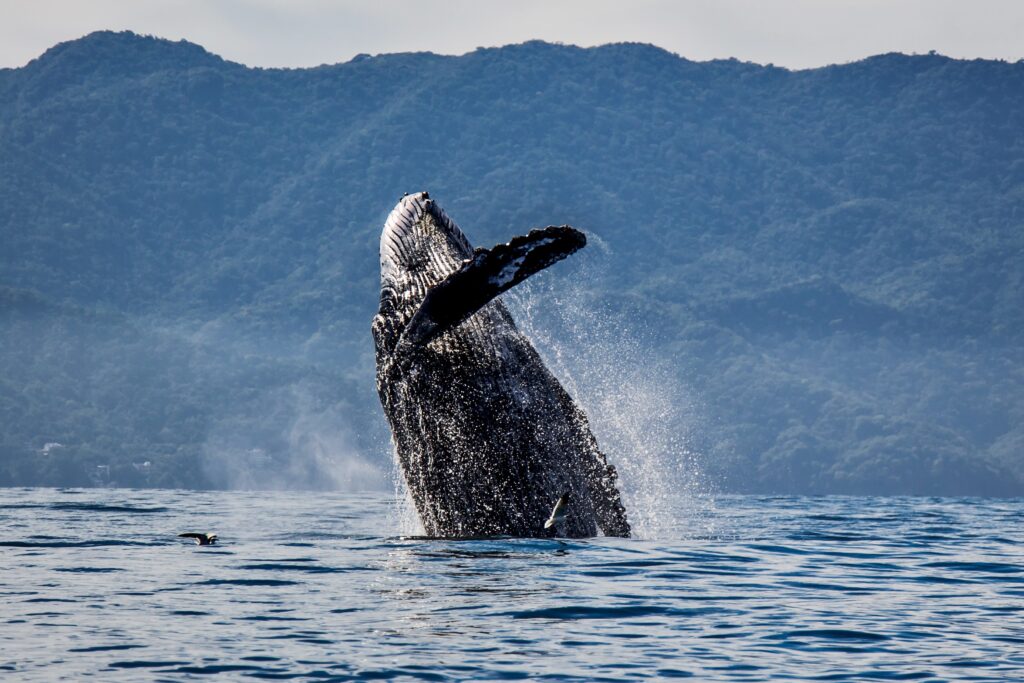
Peak whale activity: The peak months are January and February, which is when the bay sees the highest number of whales and a lot of exciting activity. During this time, you’re likely to see males competing for mates with spectacular breaches (leaping out of the water) and tail slaps. You might also spot mothers caring for newborn calves – an adorable sight as the babies learn to swim and even breach alongside mom. Early in the season (December), whales tend to exhibit courtship and mating behaviors (more surface activity and grouping), whereas later in the season (March), many whales are escorting young calves more calmly at the surface. No matter when you go in winter, whale sightings are very common – there are an estimated 300 to 500 humpbacks visiting the bay each season, so chances of encounters are excellent (some tour companies even guarantee sightings during the core season).
Time of day: Puerto Vallarta’s winter weather is generally ideal for whale watching. Mornings are usually the best time to head out, as the ocean is calmer, winds are low, and the light is great for photography. Later in the afternoon, the water can get a bit choppier, which might make it harder to spot whales (and can induce seasickness for some). Most tour operators schedule trips in the morning hours for these reasons. If you can, opt for the earliest tour of the day when conditions are most tranquil – you’ll often find whales more active before the midday heat.
What will you see? The star performers are humpback whales, by far the most common species in Banderas Bay. Humpbacks are famous for their acrobatics – you may witness tail slaps, fin slaps, spyhopping (peeking their head out vertically), and if you’re lucky, a full breach. You’ll recognize humpbacks by their huge size (adults 40-50 feet long), long pectoral fins, and knobbly heads. Besides humpbacks, the bay occasionally hosts other cetaceans: dolphins are a year-round sight (bottlenose, spinner, and spotted dolphins often play near the boats). Rarely, orca (killer whales) might pass through, or even a Bryde’s whale or minke whale in offshore waters – exciting, but these are uncommon sightings. Sea turtles and giant manta rays also inhabit the bay, and it’s not unusual to spot them gliding by. Plus, Puerto Vallarta’s coastline teems with marine birds (frigatebirds, pelicans, blue-footed boobies, etc.), so the entire ecosystem is on display during your tour.
In summary, the 2025-2026 whale watching season promises incredible opportunities to see humpback whales up close in Puerto Vallarta. Aim for a date between December and March (with Jan–Feb being ideal) and try for a morning tour to maximize your chances. Now, let’s look at how the tours work and what you should know before hopping on a boat.
How Whale Watching Tours Work in Puerto Vallarta
Booking a guided whale watching tour is the best and safest way to encounter these giants of the sea. Here’s what to expect on a typical tour in Puerto Vallarta:
- Tour Duration & Itinerary: Most whale watching trips last about 3 to 4 hours round-trip. Tours usually begin with a safety briefing at the dock in the morning, then the boat heads out into Banderas Bay in search of whales. Guides and captains communicate with each other to locate whale pods. Once whales are spotted, your captain will carefully approach and then idle at a respectful distance to allow you to watch the whales. You’ll spend time observing behaviors like breaches or tail dives, often with commentary from the guide about what you’re seeing. Multiple sightings can occur on one trip, and the boat may move to find different groups of whales. Many tours also include listening to whale songs via a hydrophone (underwater microphone) – it’s an awe-inspiring experience to hear the humpbacks’ haunting songs echoing from beneath the waves. After a few hours on the water, the boat returns you to the departure point around lunchtime or early afternoon.
- Departure Points: Whale watching excursions depart from a few main areas around the bay. The most common departure points are Marina Vallarta (near the airport), the Los Muertos Pier in Zona Romántica (Old Town Puerto Vallarta), and some from Nuevo Vallarta (in Riviera Nayarit) or Bucerías up north. A handful of local tours (like ours) depart from Mismaloya on the south side. When choosing a tour, consider the proximity of the departure to your accommodations – we’ll cover specific recommendations by location in the next section. Regardless of start point, all tours explore the same bay and have similar opportunities to find whales, since humpbacks move all around Banderas Bay.
- Boat Types: You have options ranging from small boats to large vessels. Small boats (pangas) carry around 10–15 passengers and sit lower to the water, giving an adventurous up-close feeling (you might get some sea spray!). Large boats or catamarans can hold dozens of people and offer amenities like bathrooms, shade, and sometimes lunch or open bar. Medium-sized boats (RIBs or mid-size cruisers) are a middle ground. Each style has its pros: pangas and speedboats can sometimes get to whales faster and give a more intimate encounter, while larger boats are steadier (good for those prone to seasickness or older travelers) and often have marine biologist guides onboard providing educational info. All licensed tours must carry life jackets for everyone, and safety briefings will be given. Choose the vessel that matches your comfort level – but rest assured, all boats must follow the same safety and whale-protection regulations.
- Respectful Viewing & Regulations: Mexico has strict regulations (NOM-131-SEMARNAT-2010) to protect whales in Banderas Bay, and reputable tour operators adhere closely to them. By law, small boats (under 10m) must keep at least 60 meters distance from whales, and larger boats must stay 80+ meters away. Only two boats are allowed to observe the same whale group at once, and each boat is limited to ~30 minuteswith a whale pod before they must move on. Captains are trained to approach from the side or rear at a slow, non-threatening speed (no head-on approaching or chasing). These rules ensure the whales are not harassed or stressed during their breeding and nursing season. You’ll notice that authorized boats display an official whale watching flag during the season (the flag color/design changes each year) – this indicates they have a permit from SEMARNAT and are legally operating. Tip: When booking, ask if the operator has the required government permit and check that they will fly the whale flag; avoid unlicensed “pirate” tours which may approach whales too closely or operate unsafely. Sticking with certified companies means your tour will be both safe and ethical, supporting conservation efforts while giving you a great experience.
- Guides and Education: A huge bonus of taking a tour is the guide’s expertise. Many Puerto Vallarta whale watching tours are led by marine biologists or naturalist guides who provide fascinating commentary on whale behavior, biology, and the local ecosystem. They’ll explain what the whales are doing (e.g. mating displays vs. mother-calf bonding) and may even recognize individual whales by tail patterns. As mentioned, some guides use hydrophones so you can listen to humpback whale songs resonating through the boat’s speakers – an unforgettable highlight. Don’t hesitate to ask questions; these guides are passionate experts and love to share their knowledge. By the end of the trip, you’ll not only have seen whales but also learned a ton about them.
- What’s provided on the tour: This varies by operator, but generally soft drinks and bottled water are provided, and sometimes snacks or a light lunch (especially on longer tours or large boat tours). Some higher-end tours (like luxury catamarans) even include an open bar and buffet lunch. Check the tour description: if food isn’t included, have a good breakfast beforehand and maybe bring a light snack. All boats have life vests for safety (you or your kids will usually be asked to wear them when the boat is underway). Snorkeling equipment is usually provided only if the tour includes a snorkeling stop (for example, some tours that also visit islands or Los Arcos will provide gear). Bathrooms: larger boats have a marine toilet onboard; small pangas typically do not (so you’ll want to use the restroom before departing). Tip: Use the restroom at the dock before boarding – 3 hours is a long time if nature calls and there’s no bathroom on a small boat!
- Wildlife etiquette: On the tour, remember that you are observing wild animals in their natural habitat. It’s important to follow the crew’s instructions for everyone’s safety and to respect the whales. Keep your balance when the boat stops (no sudden movements that could rock the boat). When whales are nearby, stay quiet and avoid any actions that might disturb them – for instance, no drone usage is allowed (Mexican federal regulations prohibit drones around whales). Do not throw anything overboard. If you’re taking photos, turn off the flash. Essentially, enjoy the encounter calmly and respectfully. The best whale encounters happen when we simply observe and let the whales approach or display behaviors on their own terms.
By understanding how whale watching tours operate in Puerto Vallarta, you can pick the style of trip that suits you best and be prepared for a safe, enjoyable adventure. Next, we’ll discuss how to choose the right tour based on where you’re staying in the Puerto Vallarta area.
Where to Book a Whale Watching Tour (Recommendations by Location)
Puerto Vallarta and its surrounding areas span a large bay, so the best tour option can depend on where your hotel or rental is located. Here are some recommendations:
- If you’re staying in Downtown (El Centro) or Zona Romántica (Old Town): You have easy access to tours departing from the Los Muertos Pier (in the heart of the Romantic Zone) as well as those from Marina Vallarta(about 15-20 minutes drive north). Many visitors in central PV choose a tour leaving from Los Muertos Pier for convenience – it’s right in town. However, an even better option for those in Centro/Zona Romántica is to consider a tour from Mismaloya, just a short drive south of town, especially if you want a more intimate experience. Mismaloya Xtreme (our company) offers small-group whale watching tours from Mismaloya Beach, and we provide transportation or meeting points for guests coming from central PV (it’s only ~25 minutes by taxi or our shuttle from Old Town). This way, you can avoid the larger crowds at the main pier and enjoy a boutique experience. Recommendation: For travelers in downtown and Old Town, we recommend Mismaloya Xtreme’s Whale Watching & Los Arcos tour for a unique two-in-one adventure (whales plus a Los Arcos visit). It’s close enough to be convenient, and you’ll get the added bonus of seeing Los Arcos (more on that shortly).
- If you’re staying in the South Zone (Conchas Chinas, Garza Blanca, Mismaloya, Boca de Tomatlán):You’re in luck – you’re already near the Mismaloya departure point. The south shore of PV is closer to the action for our tours. Guests staying at resorts like Garza Blanca or in villas around Mismaloya can save time by departing from Mismaloya Beach rather than driving into town or up to the marina. Recommendation: Book with Mismaloya Xtreme, since it’s right in the neighborhood and is one of the only locally-operated tours in the south bay. Our small boats depart directly from Playa Mismaloya, so it’s extremely convenient if you’re staying in the southern hotels. Plus, starting from Mismaloya means you’ll immediately get scenic coastal views (the Los Arcos islands are just offshore). For South Zone visitors, a Mismaloya tour is the best and most logical choice.
- If you’re staying in the Hotel Zone or Marina Vallarta (North Puerto Vallarta city): Many large tour operators (like Vallarta Adventures, Wildlife Connection, etc.) depart from Marina Vallarta, which will be very close by. You can easily book one of those if proximity is your priority. Morning check-in is typically at the marina offices (often around 7:30–8:00 AM). On the other hand, you’re still not far from central PV – it’s roughly 20-30 minutes by taxi to the Romantic Zone or 35 minutes to Mismaloya. So you could still join our Mismaloya tour if the idea of a smaller boat and Los Arcos appeals to you, but you’d need to arrange transport (we can help coordinate meeting at a convenient spot). If you prefer not to travel and want a bigger boat with amenities, choosing a Marina Vallarta tour might suit you. Recommendation: For ultimate convenience, pick a tour from Marina Vallarta (especially if traveling with young kids or seniors who need a larger vessel). But if you’re up for a short drive, our Los Arcos & whale combo tour can be a highlight of your trip – we’ve had many guests from the Hotel Zone who said the taxi ride was well worth the unique experience.
- If you’re staying in Nuevo Vallarta, Bucerías or Punta Mita (Riviera Nayarit side): The north side of Bahía de Banderas also has tour options – there are licensed whale tours leaving from Nuevo Vallarta’s marina, from La Cruz de Huanacaxtle, and even from Punta de Mita at the far northern tip. If you’re in this area, you might prefer booking with a local operator there to minimize driving (especially for early morning departures). The whale sightings up north are just as good – whales roam the entire bay. Recommendation: Book a tour out of Nuevo Vallarta or Punta Mita if you want to depart nearby; there are good companies operating there too. However, note that tours from the far north won’t include the Los Arcos area (which is far to the south). So if seeing Los Arcos or doing a combined whales+snorkeling trip interests you, you’d need to head down to the Puerto Vallarta side. Some travelers in Nayarit actually make a day of it and come to PV for a tour and sightseeing. Ultimately, choose what fits your schedule. But if you don’t mind the travel, Mismaloya Xtreme welcomes guests from all over the bay, and we’ll make sure it’s worth your while!
In short, travelers staying in Puerto Vallarta’s Centro, Zona Romántica, or southern resorts will find our Mismaloya Xtreme tour especially convenient and rewarding, since we’re based on the south side. Those in the northern bay can either join us with a bit of extra transport time or opt for a local departure in Nuevo/Punta Mita. No matter where you stay, there’s a whale watching tour accessible to you – just book the one that best balances convenience and the experience you want.
Our Whale Watching Tour Advantage – Whales Plus Los Arcos!
While there are many tours out there, Mismaloya Xtreme’s Whale Watching Adventure offers something truly special: we combine whale watching with a visit to the famous Los Arcos Islands. This means our guests get two amazing experiences in one trip – encountering humpback whales in the bay, and exploring the iconic Los Arcos Marine Park just off the PV coast.
Why Los Arcos? Los Arcos de Mismaloya is one of Puerto Vallarta’s most iconic natural landmarks – a cluster of dramatic granite islets with towering arches, caves, and a thriving reef ecosystem. It’s actually a federally protected marine sanctuary (sometimes called a “natural aquarium”) known for its vibrant marine life. By including Los Arcos in our tour, we give you bonus sights and activities that other whale tours from town often don’t provide. Here’s what our combo tour looks like:
- We depart from Playa Mismaloya, a historic beach south of PV (famous as the film site of Night of the Iguana). The boat first heads out into the bay for the whale watching portion. You’ll have a local expert guide on board (we’re a 100% local team proud of our home waters) who will share insights as we search for whales. We keep our groups small, so everyone has a great view and personalized attention. Whale sightings are virtually guaranteed during the core season – we often see multiple humpbacks on each trip, sometimes breaching or tail-slapping right near our boat. We follow all the proper guidelines to respect the whales, of course, but being in a smaller boat allows us to quietly maneuver for excellent viewing when conditions permit.
- After we’ve enjoyed whale encounters (typically we allocate plenty of time to find and observe whales), we cruise to Los Arcos, which is only a short distance from Mismaloya. As we approach, you’ll marvel at the towering rock formations rising out of the sea. We’ll get up close to the arches and sea caves – keep an eye out for the many seabirds nesting on the cliffs (blue-footed and brown-footed boobies, pelicans, frigate birds and more. If conditions are nice and you’re interested, we’ll provide snorkeling gear so you can jump in and snorkel in the crystal-clear waters around Los Arcos. Underwater, you’ll encounter colorful tropical fish, corals, maybe a spotted ray or even a sea turtle gliding by. The water around Los Arcos is teeming with life thanks to the protected status – it’s truly like swimming in an aquarium! Snorkeling is optional but highly recommended if you love marine life. If you prefer to stay dry, you can still enjoy the views of the arches from the boat and take amazing photos.
- Throughout the tour, our friendly crew (bilingual in English/Spanish) is there to ensure you have a safe and fun time. Being a local small business, we pride ourselves on hospitality – from offering bottled water, soda, or a cold beer on board, to sharing local stories about the area. (Did you know the name “Los Arcos” means “The Arches”? You’ll see why when we pass under the huge archway rock!). We love to share tidbits about Mismaloya’s history, the filming of Hollywood movies here, and the ecology of the bay. It’s an educational and adventurous tour rolled into one.
In essence, our tour’s advantage is the added value of Los Arcos. You get all the thrill of whale watching plus a mini tropical island adventure. Guests often tell us it felt like they got two tours for the price of one! You’ll come back having witnessed humpback whales in the wild and having explored one of PV’s most beautiful marine parks. For anyone staying in Puerto Vallarta’s south side (or even if you’re in town and want a unique experience), this is the perfect tour to maximize your day.
Why choose Mismaloya Xtreme? Aside from the Los Arcos inclusion, we offer small-group experiences (no overcrowded boats) and a genuine local touch. We’re a fully licensed operator with experienced captains and guides who have grown up on these waters. Safety and respect for the wildlife are our top priorities, and we’re passionate about sharing our love of whales with every guest. Our convenient location in Mismaloya is closer to where the action often is, and we provide or arrange transportation from central pickup spots if needed, so it’s hassle-free. When you book with us (👉 mismaloyaxtreme.com), you’re supporting a local family-run business and ensuring you get a personalized, memorable tour. We truly believe it’ll be the highlight of your Puerto Vallarta vacation!
Frequently Asked Questions (FAQ) – Puerto Vallarta Whale Watching
Below we answer some of the most common questions travelers have when planning a whale watching tour in Puerto Vallarta:
When is the whale watching season in Puerto Vallarta?
A: The season is during the winter: early December through late March each year. For 2025-2026, tours operate roughly Dec 8, 2025 to Mar 23, 2026, which is when humpback whales are in Banderas Bay. Outside these dates, the whales migrate north and tours are not available.
What is the best month to go whale watching?
A: January and February are considered the best months for whale watching in Puerto Vallarta. During these months the whale population is at its peak, and you’re very likely to see multiple whales, including calves. December and March can be good as well (especially mid-late December and early March), but sightings are slightly less abundant at the edges of the season.
How far in advance should I book my whale watching tour?
A: It’s wise to book your tour in advance, especially if you’ll be here in January or February. The season is relatively short and popular tours can fill up quick. Many travelers reserve their spots weeks or even months ahead. Booking early also gives you more choice of dates and tour types. If you’re visiting during Christmas/New Year’s or President’s Day peak times, definitely secure a reservation ahead of time to avoid disappointment. (Some operators, like us, also offer easy rescheduling if weather doesn’t cooperate, so booking early is low-risk.)
Are whale sightings guaranteed?
A: While nature has no absolute guarantees, Puerto Vallarta has so many whales that it’s very likely you’ll see them. Reputable companies boast high success rates. In fact, one major operator even offers a whale-sighting guaranteeduring the core of the season (roughly late Dec through early Mar) – if no whales are seen, they’ll take you out again for free. That’s how confident they are! With or without a formal guarantee, it’s rare to completely miss whales in peak season. Tip: Choose a tour in prime months and go in the morning for the best odds.
What should I wear and bring on the boat?
A: Dress in layers. Mornings can be cool, but it warms up fast under the sun. A light jacket or sweater for the early breeze (and for when the boat is at speed) is smart, and underneath wear a t-shirt or swimwear that you can be comfortable in late. Definitely bring sun protection: a hat, sunglasses, and reef-safe sunscreen are musts (the sun reflects off the water, so you can get a lot of UV exposure). If you plan to snorkel at Los Arcos or if you’re on a smaller boat, also bring a towel and maybe a dry change of clothes – you might get splashed. Footwear can be flip-flops or sandals; most small boats will have you remove shoes when boarding anyway. Other items to pack in a day bag: camera or smartphone for photos (ideally with a waterproof case or ziplock bag, just in case), a reusable water bottle, and maybe some light snacks (granola bar, etc.) if not provided. And if you’re sensitive to motion, consider seasickness remedies (Dramamine or wristbands) – it’s better to have them and not need them than vice versa.
Is it safe to take kids on a whale watching tour?
A: Yes, whale watching is a family-friendly activity. Children love seeing the whales, and it can be a very inspiring experience for them. Most tour companies allow kids of all ages on the larger boats (some have a minimum age of 4-6 for smaller boats). For example, Vallarta Adventures’ large catamaran tour has no age restriction (even toddlers can come with parents). On our small-group tours, we generally recommend ages 3 and up, mainly so the child can enjoy it and sit relatively still in a moving boat. If you have an infant or toddler, a big stable boat might be better. Always inform the operator if you’re bringing young kids so they can advise on safety (life jackets for small children will be provided). With proper precautions (life vests, hats, sunscreen), kids and even teenagers can have a blast whale watching. It’s both fun and educational for them.
Can I go whale watching if I’m pregnant or if I get seasick easily?
A: Many pregnant women do enjoy whale watching, but it depends on your comfort. If you’re in the second trimester and feeling well, for instance, you might be fine on a stable boat – but always consult your doctor. The boat ride can be bouncy, especially in a small boat or if waves pick up. If you’re prone to motion sickness, choose a larger vessel or catamaran for more stability, go in the morning (calmer waters), and consider taking anti-seasickness medication in advance as a precaution. Sit in the middle of the boat where there is less motion. Most people do great, but it’s important to know yourself. The bay is relatively calm compared to open ocean, so seasickness isn’t very common – but it can happen. Operators usually have sick bags on hand just in case.
Do I need any special equipment or can I use my phone for photos?
A: You don’t need any special gear to enjoy whale watching – just your eyes and enthusiasm! For photos, you can absolutely use your smartphone and get decent shots if whales come close. Just keep a good grip on it (a wrist strap is a good idea) and maybe use a waterproof pouch if you’re worried about splashes. If you’re a photography buff, bring a camera with a zoom lens to capture whales that are farther away. A 200mm or 300mm lens is great for whale photography. Some people also bring GoPro or waterproof cameras to get wide-angle videos – especially fun if a whale surfaces near the boat. Remember to enjoy the moment too, and not only look through a lens. Often the best memories are captured in your mind (plus you can always swap photos with fellow passengers later).
Can I see whales from shore without taking a tour?
A: It’s possible but not guaranteed. Humpback whales do come relatively close to the bay’s shores, and sometimes from beachfront hotels or the Malecón you might see a spout or a tail in the distance. However, whales tend to stay a bit further out where the water is deeper (often a kilometer or more offshore). You’d need to stare at the ocean for a while and have some binoculars to catch a good sighting from land. Some viewpoints along the coast (like Mirador de La Cruz, or high terraces in Conchas Chinas) occasionally afford whale glimpses. But nothing compares to being out on a boat, closer to where the action is. On a tour you might get within tens of meters of whales (following the legal limits) – you certainly can’t get that from land. So while you might see a whale breaching from your hotel balcony if luck strikes, it’s definitely worth going on a boat tour for a meaningful encounter.
What about dolphins – will we see them too?
A: Very likely, yes! Banderas Bay is home to several dolphin species year-round, such as bottlenose dolphins and spinner dolphins. They often make appearances during whale tours – sometimes riding the bow wave of the boat or leaping out of the water playfully. Many tours report seeing pods of dolphins in addition to whales. We certainly enjoy it when a group of dolphins comes to say hello during our trips. So consider it an extra bonus; while you’re looking for whales, keep an eye out for dolphins, rays, turtles, and even flying fish. There’s a lot of marine life in PV!
Are the whales in Puerto Vallarta protected?
A: Absolutely. Humpback whales are a protected species in Mexico, and Banderas Bay is essentially a marine sanctuary for them during the winter months. Tour operators must have special permits and follow regulations (distance, time limits, etc.) as discussed earlier to ensure the whales are not disturbed. It’s illegal to harass or feed the whales, and swimming with whales is not allowed for both whale and human safety. Local conservation groups (like ECOBAC) and authorities monitor the tours. By choosing a licensed, responsible tour (look for that whale-watching flag on the boat), you are participating in a sustainable activity. The fees and permits help fund whale research and conservation in the bay. In short, yes – the whales are well looked after here, and whale watching is managed in a way to keep it that way.
Can I swim or snorkel with the whales?
A: No – swimming with whales is not permitted in Puerto Vallarta (or anywhere in Mexico for humpbacks). Whales are large wild animals, and regulations prohibit entering the water with them to prevent disturbance or injury. But don’t worry – you’ll get close enough on the boat to appreciate their size and beauty. If you’re interested in snorkeling as part of your tour, consider trips (like ours) that include a snorkeling stop at Los Arcos or the Marietas Islands. You won’t be in the water with whales, but you’ll still experience the marine environment up close in a safe, legal way.
How do I choose a reputable whale watching tour operator?
A: Look for a company with the following: official permits (SEMARNAT authorization – usually indicated by mention of adherence to regulations or displaying the whale flag), experienced guides (marine biologists or local experts), a focus on small groups or responsible practices, and good reviews from other travelers. Avoid anyone on the beach or street who offers a deal that seems too good to be true or is vague about permits. Checking recent online reviews on TripAdvisor or Google can be very helpful. All the established operators in PV emphasize safety and whale welfare – if you stick to those, you’ll be in good hands. Of course, if you’re reading this, you already have a great option in Mismaloya Xtreme for a licensed, eco-friendly tour with a unique twist! 😉
We hope this guide has answered your questions and gotten you excited for the 2025-2026 whale watching season in Puerto Vallarta. Witnessing humpback whales in the wild is an awe-inspiring experience that truly tops the list of things to do here in winter. Between the thrill of seeing a 40-ton whale breach and the serene beauty of cruising our bay at sunrise, it’s an adventure you’ll never forget. Puerto Vallarta is blessed with an incredible natural setting for whale encounters, and we’re passionate about sharing it with visitors in a respectful and fun way.
Plan ahead, book the right tour for your needs, and get ready for the marine wildlife adventure of a lifetime. If you’re staying in the downtown or south side areas, we’d love to host you on our Whale Watching & Los Arcos Island Tour – it’s truly the ultimate combo to make the most of your day (feel free to contact us at Mismaloya Xtreme for details or to reserve your spot). But no matter who you tour with, be prepared for jaw-dropping sights and perhaps a deeper appreciation for these gentle giants that grace our bay each year.
Here’s to an amazing and eco-conscious whale watching experience in Puerto Vallarta. Enjoy the 2025-2026 season, and happy whale spotting! 🐳🌴